Stucco remediation · Boise, ID
Stucco remediation and moisture repair
A stain on the wall or a soft spot under a window is worrying, and it's hard to know whether it's a $400 patch or a wall that needs rebuilding. We'll find the water first, then tell you honestly how far it goes and what it costs — before we touch anything.
Boise Stucco Pros covers stucco remediation in Boise and the Treasure Valley. It usually starts with an inspection report: a stain under a window, a soft spot, a moisture flag before closing. Boise is dry, with about 11.5 in. of precipitation a year at the airport. It isn't rain that soaks most valley walls. It's the irrigated lawn: sprinklers hitting the base of the wall every morning, landscape rock piled over the weep screed, and roof runoff at a missing kickout flashing. The fix starts with finding which one it is.
Stucco remediation typically runs $20–$50 per sq ft for remove-and-replace, and up to $50–$120 per sq ft with major water damage.
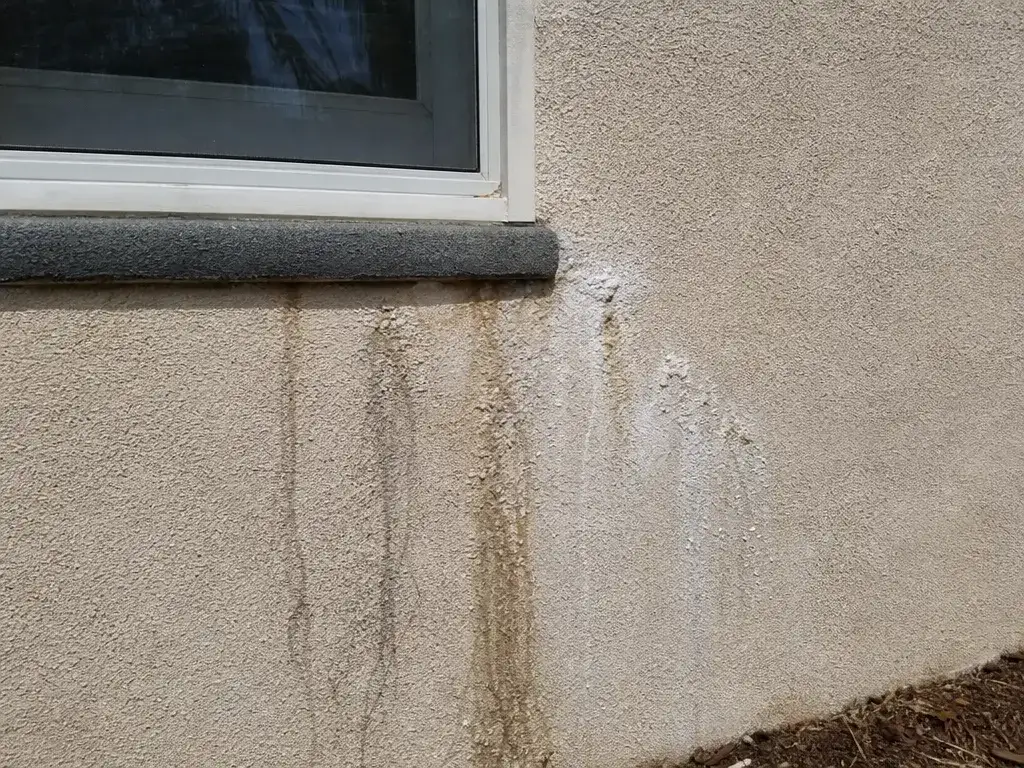
Signs water is getting behind the stucco
Brown streaks or stains below windows
Window and door openings are the most common entry point. Building code requires flashing there, with pan flashing at sills.
White, chalky bloom at the base of the wall
Efflorescence: salts carried out by water. In irrigated yards it often tracks the sprinkler line.
Bubbling or peeling finish near the ground
Moisture wicking up from the soil or a buried screed. Recoating it without fixing the water just brings the salts back.
Stain or crack where a roof meets a wall
Likely a missing kickout flashing, which the code requires at roof-wall intersections.
Hollow or soft spot when pressed
Possibly wet or rotted sheathing behind the stucco, or EIFS.
A rust-stained crack
Water reaching the metal lath.
Inspection report flagged the stucco? We'll look at it before your deadline.
Where water gets into a Boise stucco wall
Water usually enters stucco at openings, roof-wall intersections and the base of the wall, not through the middle of a sound panel.
- Windows and doors: Idaho's adopted residential code (2018 IRC R703.4) requires flashing at openings per the manufacturer's instructions, with pan flashing at sills when there are none.
- Roof-wall intersections: without a kickout (diverter) flashing at the eave end, roof runoff gets driven into the wall. Based on industry standards and guidelines, step flashing runs at least 4 in. up the wall and 4 in. onto the roof, tied into the drainage plane.
- The base of the wall: the weep screed must sit at least 4 in. above soil or 2 in. above paving (R703.7.2.1), and its weep holes must never be covered.
- The drainage plane itself: over wood sheathing, code calls for a barrier equal to two layers of Grade D paper (R703.7.3). Here's why: the outer layer bonds to the stucco, the inner one stays a drainage plane. One layer bonds and stops draining.
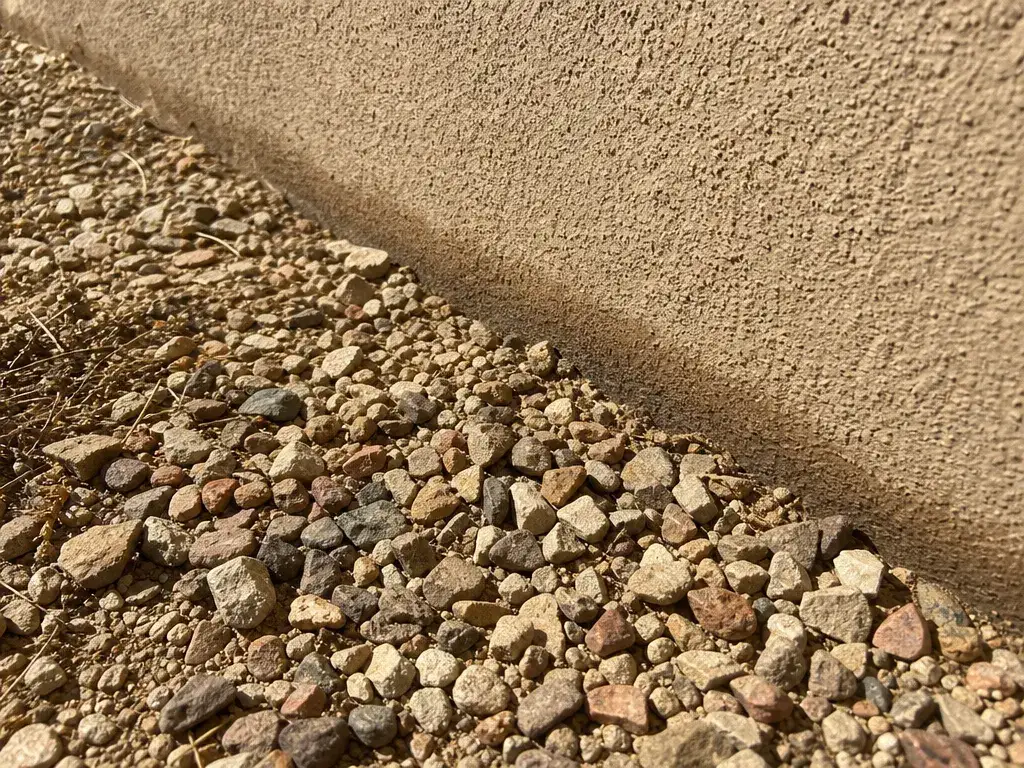
Turn the sprinklers before you patch
In an irrigated Treasure Valley yard, the sprinkler head that hits the stucco every morning can be the whole problem.
Sprinklers that keep soaking a wall drive moisture and efflorescence at its base. Salts wicking up the wall weaken stucco and topcoat adhesion. We don't recoat until the grade, the sprinklers and the screed clearance are fixed; otherwise the salts keep coming back. Retrofitting a buried screed typically means removing about a foot of stucco above grade.
Stains along the base of the wall? We find the water source first.
How moisture testing works
Invasive probe testing drills pairs of small holes through the stucco, mostly under windows, and measures moisture in the sheathing behind.
A meter reads moisture content through two 3/16 in. holes about an inch apart, and the holes get sealed afterward. Thermal imaging and non-invasive meters screen for problems; cutting an opening confirms them. A common reading scale: 15% or less is normal, 15–20% suggests leakage, over 20% is excessive, and wood starts to rot around 28%. There's no single industry standard.
We test from the outside, under the windows. An interior-side test can read dry while the sheathing behind the stucco is wet enough to scrape off by hand. Testing typically runs $400–$1,500. For buyers, invasive testing needs the seller's written permission.
Prices vary with the type of repair, how far the damage goes and the finish you want. Your number is confirmed at the walkthrough, never fixed on this page.
Partial repair vs. full remediation
A partial cut-out without a drainage path can just move the water. On walls with no drainage, full remediation is the fix that holds.
A targeted repair of a single window or a single kickout can make sense when testing shows the problem is local. Full remediation, in order:
Tear off to the sheathing
Stucco comes off the affected walls, down to the wood.
Pull the windows
Windows are removed so their flashing can be rebuilt properly. Window leakage was the biggest single cause of 1990s EIFS failures, and the same detail matters for hardcoat stucco.
Replace rotted sheathing and framing
Anything soft, stained or delaminated gets cut out.
Rebuild the drainage plane
A drainable housewrap, then the windows reinstalled with pan and head flashing, then a rainscreen gap, then a second barrier layer.
New lath and stucco
Lath, scratch, brown and finish coats, with a weep screed at the base and kickout flashing where roofs meet walls.
Some owners choose to re-side in fiber cement instead of new stucco once the wall is open. In Boise, siding work runs on the city's Form 428 permit. Registration is on us too: any job of this size needs an Idaho-registered contractor. We will handle all the paperwork and permitting as required in your city. We do this work under the registration it requires.
Need a remediation scope priced in writing?
What remediation costs
Remove-and-replace stucco typically runs $20–$50 per sq ft, water-damaged sections at $30–$50, and major damage up to $50–$120 per sq ft.
Treat these as planning ranges; your number is set once we've seen how far the damage goes. These are items that could affect the price: square footage torn off, how much sheathing and framing is rotted, window removal and reflashing, rainscreen and barrier materials, and scaffolding. We will walk through all of them with you and provide an itemized estimate.
You may read about Pennsylvania, where whole-house stucco remediation on homes built around 2003–2013 has run past six figures. That's a much wetter climate, and those are not Idaho figures. It's useful for one thing only: showing how water trapped behind stucco rots sheathing for years before anyone sees it. For smaller damage, see stucco patching; for system types and the overall process, see the Boise stucco repair page.
Prices vary with the type of repair, how far the damage goes and the finish you want. Your number is confirmed at the walkthrough, never fixed on this page.
Stucco moisture and remediation questions
What is stucco remediation?
Removing stucco to the sheathing, replacing rotted wood, and rebuilding with proper flashing, a two-layer water-resistive barrier and a drainage space, then new stucco. It's different from a patch: it fixes the water path, not just the surface.
How much does a stucco moisture inspection cost?
Testing typically runs $400–$1,500, depending on whether invasive probes are used and how big the house is.
Does invasive testing damage the house?
It leaves small holes, about 3/16 in., drilled in pairs and sealed with caulk afterward. A buyer needs the seller's written permission to do it.
What do the moisture readings mean?
A common scale: 15% or less is normal, 15–20% suggests some leakage, over 20% is excessive. Wood starts to rot around 28%. There's no single industry standard.
What is a weep screed?
The metal or plastic strip at the bottom of a stucco wall that lets water out. Idaho's adopted residential code (2018 IRC R703.7.2.1) puts it at least 4 in. above soil or 2 in. above paving. Burying it under rock, soil or pavers traps water.
Free stucco remediation estimate
We'll respond within the same business day and schedule a time to come out, look at the wall, and talk you through the process. Rather talk? (986) 290-4810.